Gymmaxxing : The guide I wish I had when I first started lifting (For Men)
Thread music :
Disclaimer :I haven’t used any type of generative AI for this guide, all credits go to @Blackpillirony and cited sources. While I wrote it mainly for men, women can also learn a thing or two from this guide.
These next sections for chest, arms, back + shoulders, legs and abs is for what I consider to be the most essential exercises to apply to your workout routine. I am not saying ALL these exercises need to be in your routine, especially those who train the same muscle. It’s simply compound exercises I strongly recommend.
Gotta cut the thread in half because of the 20 images limit.
Thread music :
Disclaimer :I haven’t used any type of generative AI for this guide, all credits go to @Blackpillirony and cited sources. While I wrote it mainly for men, women can also learn a thing or two from this guide.
There are multiples benefits to lifting, including :
And I haven’t even listed them all. Still not convinced to hit the gym once and for all ? : https://looksmax.org/threads/gymcel...body-the-same-way-we-do-its-100-legit.256601/
For example, if we take 2 of the most well-known supermodels’ physiques glazed by this community, Chico Lachowski and Jordan Barrett, we can see that Chico has a much more appealing physique than Jordan’s.
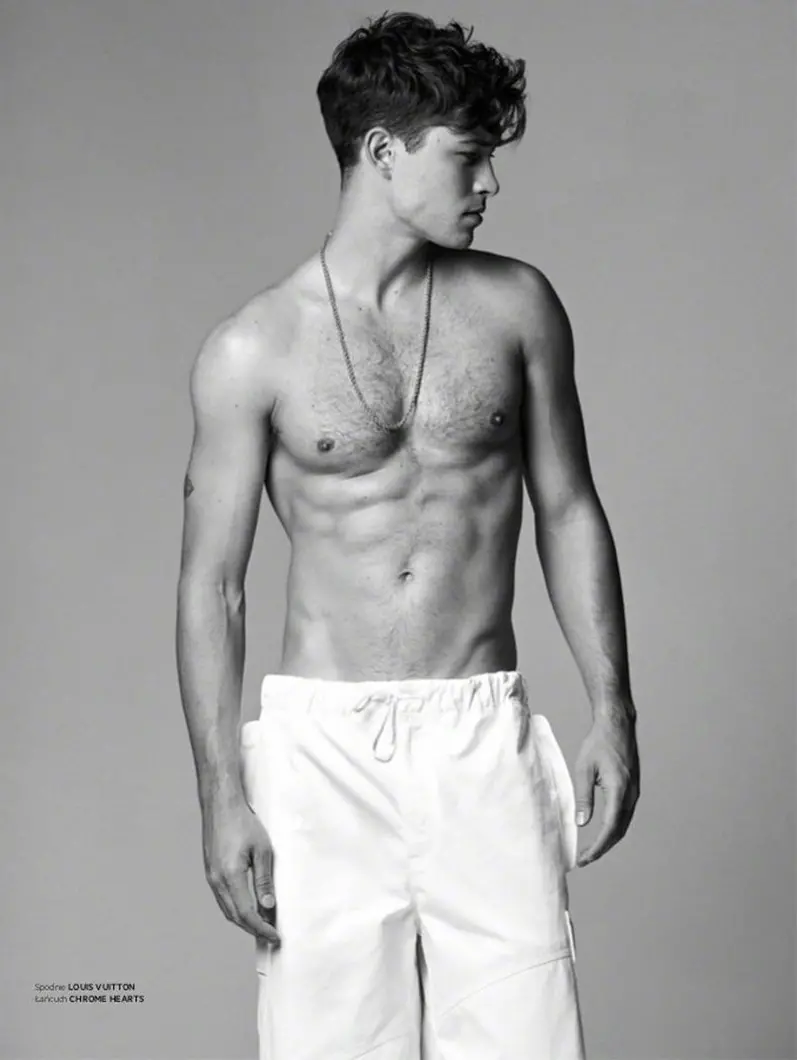

Indeed, Chico’s physique looks strong and well-proportioned while Jordan’s physique looks weak and malnourished. The fact is, an aesthetic physique like Chico’s is easily achievable for most men in a couple of years of work and consistency.
Deconstructing copes to avoid the gym:
· « I’ll get too big » If you stay natural, you shouldn’t have this fear since naturally built physiques are generally inherently well-proportioned and aesthetic unless you have deformities or have shit genetics (even then it’s better to hit the gym anyway and have a bit of muscle mass).
· « Girls don’t like muscle mass on guys » Factually false, I know this both from experience and from actual studies: https://fitnessvolt.com/women-prefer-muscular-men/
· « Lifting weights stunts growth/decreases testosterone.» One of my favorite copes to see online, there’s absolutely no scientific evidence that lifting weights has the slightest risk of stunting your growth or decreasing your testosterone. Skinnycels think that since you stress your body during intense physical activities it must impact your testosterone but research proves the opposite : https://www.menshealth.com/health/a68059071/does-exercise-increase-testosterone/
TLDR (It’s a bit long of an article) : The gym contributes to healthy habits that in turn contribute to the maintenance of healthy testosterone levels.
· « I am scared of being seen/I have social anxiety » At the gym, most people are in their own bubbles and do their thing. I can’t deny the social aspect of it though; people can come ask you for spots or if you’re done using the bench for example. It can however be a great idea to make friends to help you on your own journey, they might help you with useful tips and coach you for free.
· « I don’t have enough time » A full workout at the gym should take you between 45 minutes to an hour. You ideally should go around 3-4 times a week, maybe even 2 times. That’s around 2% of your whole week, you can find time somewhere in your schedule if you really try (or else you must have a very stressful and restless life).
· « I don’t have enough money » Considering most of the people reading this guide are minors living with their parents, you can personally ask them and argue to make them buy you a gym membership. In my country (Canada), I found a 45 CAD/month (33 USD or 28 Euros) membership per month in a gym really not that far from where I live (15 minutes walk/8 minutes in public transportation). If your parents care about your personal development, you should find a consensus where they can get you a gym membership (or else you truly have stingy parents).
My experience : I started calisthenics around April 2023 and then started lifting in September of the same year, meaning I've been lifting more or less consistently for a bit more than 2 years. What I’ve noticed on a school trip in June 2023 is that a few girls complimented me on my physique. On another school trip in September 2023, both boys,girls and teachers made comments on my physique I built with just a bit of calisthenics I did during summer break. I wasn’t particularly above average facially at the time and really I was training around 2 hours per week, which means you don’t need much effort to build an above average. And since then, I started lifting and really started building muscle to sculpt my own aesthetic physique. This guide will tell y’all what I’ve learned in these 2 years from my own research, practice, received advice and experience.
- Increased SMV, pretty water but a jacked MTN has more SMV than a skinny MTN.
- Mental health benefits, it has been proven countless times that lifting increases endorphins, reduces anxiety and improves mood.
- Makes you learn the importance of resilience and consistency
- Lifting has been proven to enhance cognitive functions (IQmaxx)
- Improves your quality of life, life expectancy, bone density and more.
- Helps you stay lean and fit which has positive effects on facial attractiveness
And I haven’t even listed them all. Still not convinced to hit the gym once and for all ? : https://looksmax.org/threads/gymcel...body-the-same-way-we-do-its-100-legit.256601/
For example, if we take 2 of the most well-known supermodels’ physiques glazed by this community, Chico Lachowski and Jordan Barrett, we can see that Chico has a much more appealing physique than Jordan’s.
Indeed, Chico’s physique looks strong and well-proportioned while Jordan’s physique looks weak and malnourished. The fact is, an aesthetic physique like Chico’s is easily achievable for most men in a couple of years of work and consistency.
Deconstructing copes to avoid the gym:
· « I’ll get too big » If you stay natural, you shouldn’t have this fear since naturally built physiques are generally inherently well-proportioned and aesthetic unless you have deformities or have shit genetics (even then it’s better to hit the gym anyway and have a bit of muscle mass).
· « Girls don’t like muscle mass on guys » Factually false, I know this both from experience and from actual studies: https://fitnessvolt.com/women-prefer-muscular-men/
· « Lifting weights stunts growth/decreases testosterone.» One of my favorite copes to see online, there’s absolutely no scientific evidence that lifting weights has the slightest risk of stunting your growth or decreasing your testosterone. Skinnycels think that since you stress your body during intense physical activities it must impact your testosterone but research proves the opposite : https://www.menshealth.com/health/a68059071/does-exercise-increase-testosterone/
TLDR (It’s a bit long of an article) : The gym contributes to healthy habits that in turn contribute to the maintenance of healthy testosterone levels.
· « I am scared of being seen/I have social anxiety » At the gym, most people are in their own bubbles and do their thing. I can’t deny the social aspect of it though; people can come ask you for spots or if you’re done using the bench for example. It can however be a great idea to make friends to help you on your own journey, they might help you with useful tips and coach you for free.
· « I don’t have enough time » A full workout at the gym should take you between 45 minutes to an hour. You ideally should go around 3-4 times a week, maybe even 2 times. That’s around 2% of your whole week, you can find time somewhere in your schedule if you really try (or else you must have a very stressful and restless life).
· « I don’t have enough money » Considering most of the people reading this guide are minors living with their parents, you can personally ask them and argue to make them buy you a gym membership. In my country (Canada), I found a 45 CAD/month (33 USD or 28 Euros) membership per month in a gym really not that far from where I live (15 minutes walk/8 minutes in public transportation). If your parents care about your personal development, you should find a consensus where they can get you a gym membership (or else you truly have stingy parents).
My experience : I started calisthenics around April 2023 and then started lifting in September of the same year, meaning I've been lifting more or less consistently for a bit more than 2 years. What I’ve noticed on a school trip in June 2023 is that a few girls complimented me on my physique. On another school trip in September 2023, both boys,girls and teachers made comments on my physique I built with just a bit of calisthenics I did during summer break. I wasn’t particularly above average facially at the time and really I was training around 2 hours per week, which means you don’t need much effort to build an above average. And since then, I started lifting and really started building muscle to sculpt my own aesthetic physique. This guide will tell y’all what I’ve learned in these 2 years from my own research, practice, received advice and experience.
How is muscle built ? (Not really due to micro-tears):
Most people think that working out creates micro-tears in the muscle fibers and that with protein synthesis it makes the muscle bigger and stronger as you recover. It’s partially true, the fact is we don’t know exactly how building muscle actually works, meaning the micro-tears explanation is just a theory. « Despite popular belief, studies showing a cause-and-effect relationship between micro tears and hypertrophy are inconclusive. » - https://www.cka.ca/en/nlka-current-...ess-a-valid-indicator-of-muscular-adaptations
What we do know, however, is that « resistance training leads to trauma or injury of the cellular proteins in muscle. This prompts cell-signaling messages to activate satellite cells to begin a cascade of events leading to muscle repair and growth. » - https://www.unm.edu/~lkravitz/Article folder/musclesgrowLK.html
Hypertrophy:
Working for hypertrophy (the increase of muscle) is what you want for an aesthetic physique. Ideally, you’d want to do in-between 6 to 12 reps per set as it's the sweet spot for hypertrophy. What I like to do is 4 per exercise with sometimes 2 sets of one exercise and another 2 sets of a variant targeting the same muscle (for example 2 sets of dumbbell bicep curls and 2 sets of cable bicep curls). I also rest around 90 seconds to 2 minutes and a half between each sets. Personally I, like to make my first set for an exercise a warmup, meaning the weight is not as high as the 2 or 3 sets following and then for my last set I decrease the weight again since my muscles are pretty sore from the last set. You also want to go through the full range of motion on each exercise (ROM) as it's proven to be optimal for hypertrophy, especially on lower body exercises. I’ll dive into what I think are the most essential exercises later on this thread.
Training to failure : Approaching failure is key to building muscle efficiently. It may hurt, but pushing your body to its limits has been proven on a big meta-analysis to have a correlation between training close to failure and significant change in muscle size. The most interesting graph of this meta-analysis is this one: https://www.researchgate.net/public...scle_Hypertrophy_A_Series_of_Meta-Regressions
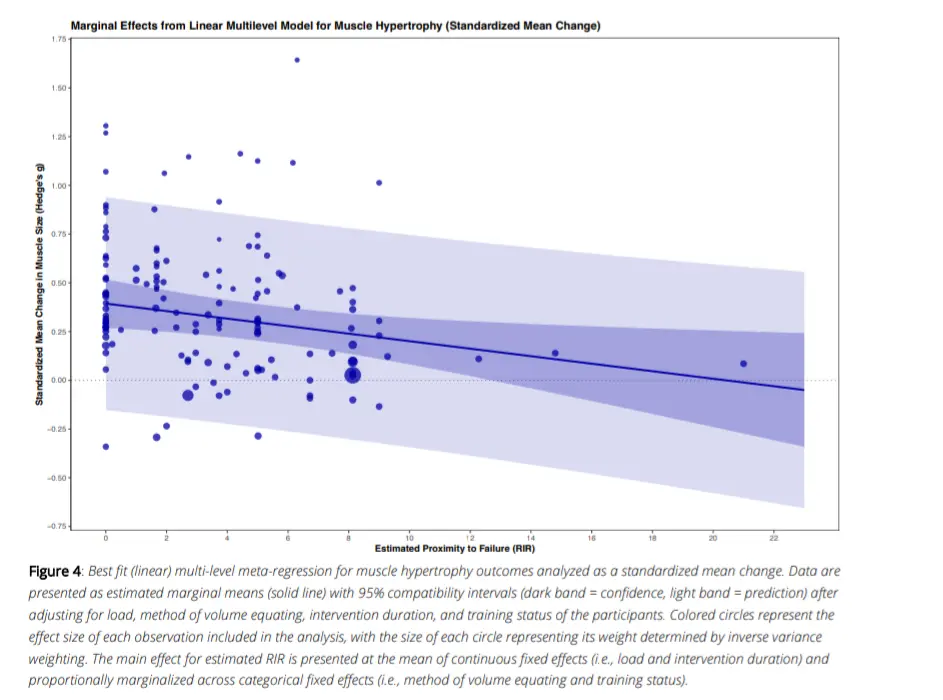
Although there's nuance, training close to failure increases the risk of injuries and soreness, so it's not recommended to absolute beginners. Still, training to failure or close to failure is much more efficient than leaving too much reps in reserve.
Progressive overload : Learning how to properly use progressive overload is essential to consistently build muscle over time. Progressive overload consists of slowly but surely increasing the weight over months and years of lifting. You may start at 5kg on one exercise for example, but after a few weeks this weight should increase if you still want to see an increase in muscle size. As you increase muscle strength with muscle size, you’ll eventually not reach failure quite as easily with the same weight. My advice is to increase the weight once you’re able to do at least 15 reps without breaking a sweat. For example, you realize you can do 15 reps of lateral raises with 5kg dumbbells without being close to failure. It would be recommended to increase the size to 7.5kg for the same exercise to keep being pushed to failure.
Ideally you’d want to prioritize compound lifts as they work muscle groups at once and free weight exercises as they generally engage the core, train stability/balance and even cause a greater increase in free testosterone than machines. (https://pubmed.ncbi.nlm.nih.gov/32358310/). However if you have an injury and still want to train, it's preferable to use machines.
For splits, it depends on your availability and preferences. Personally I use the Push/Pull/Legs split 3 times a week during school and 7 times per 2 weeks (Push/Rest/Pull/Rest/Legs/Rest) but I know it’s not what other lifters like. Some prefer an Upper/Lower split, some Full Body, some hybrids or Bro Splits. The thing is, the best split is the one you’ll consistently follow and that personally works the best for you. If you can only lift 2 times per week, a Full Body or Upper/Lower split will be more adapted for example. I would recommend experimenting with different splits before finding the best one for you.
Rest : Like said in my ‘‘How muscle is built’’ section previously, working out only prompts your body to build more muscle, you need rest and the right nutrients to actually build muscle. Some people will overwork themselves at the gym, going every or nearly everyday at the gym to notice no result and tire uselessly their body. The sweet spot for hypertrophy is around 3-4 workout sessions ranging from 40 to 75 minutes per week each. Concerning rest between sets, a study from 2016 ( https://journals.lww.com/nsca-jscr/...r_interset_rest_periods_enhance_muscle.3.aspx ) hints at longer rests (around 3 minutes between each sets) being more efficient for muscle growth. I think 3 minutes is a bit too much when you can do more sets with 2 minutes rest between each sets BUT it may be helpful for beginners to let their body adapt. Working out too much just doesn’t let your muscles properly rest and therefore is counter-productive since you don’t let them grow. Sleep is also damn important for muscle growth, make sure to sleep at least 7 hours.
Creatine : Creatine is one of the most researched supplements, I've been taking it for around 4 months and noticed slight improvements in recovery and energy ever since. Creatine has been proven to help muscles recover faster and improve performance. It doesn't cause bloating and it doesn't cause hair loss. The recommended dose is about 3-5 grams daily. I would recommend taking it as in the long term you'll be leaving gains on the table. Fun fact : Creatine has been proven to increase cognitive abilities and therefore old people have been using it to slow down cognitive decline.
Calisthenics : Before really lifting weights, I did around 5 months of calisthenics. Calisthenics and lifting weights both have their pros and I understand why people would be much more interested in doing calisthenics rather than lifting weights because it's cheaper and necessitates much less equipment, making it much more accessible. However, calisthenics alone are not the best for building muscle, tho they've helped me getting more toned like I mentioned in my experience earlier. I won't go mention a lot of calisthenics exercises apart from pull-ups but if you really can't go a gym or you're considering it but not really convinced, you can try calisthenics for a couple of months and see how much physical exercise suits or not.
If you start skinny like I did I would most definitely recommend lean bulking. Lean bulking is a compromise between aesthetics and muscle building, it limits excess fat while optimizing muscle growth. Basically it’s eating slightly above your caloric maintenance (10-20%) and having a good balanced diet. You don’t need to become a bulk monster to gain muscle and this tactic helps me keep a 6-pack year round.
Most people think that working out creates micro-tears in the muscle fibers and that with protein synthesis it makes the muscle bigger and stronger as you recover. It’s partially true, the fact is we don’t know exactly how building muscle actually works, meaning the micro-tears explanation is just a theory. « Despite popular belief, studies showing a cause-and-effect relationship between micro tears and hypertrophy are inconclusive. » - https://www.cka.ca/en/nlka-current-...ess-a-valid-indicator-of-muscular-adaptations
What we do know, however, is that « resistance training leads to trauma or injury of the cellular proteins in muscle. This prompts cell-signaling messages to activate satellite cells to begin a cascade of events leading to muscle repair and growth. » - https://www.unm.edu/~lkravitz/Article folder/musclesgrowLK.html
Hypertrophy:
Working for hypertrophy (the increase of muscle) is what you want for an aesthetic physique. Ideally, you’d want to do in-between 6 to 12 reps per set as it's the sweet spot for hypertrophy. What I like to do is 4 per exercise with sometimes 2 sets of one exercise and another 2 sets of a variant targeting the same muscle (for example 2 sets of dumbbell bicep curls and 2 sets of cable bicep curls). I also rest around 90 seconds to 2 minutes and a half between each sets. Personally I, like to make my first set for an exercise a warmup, meaning the weight is not as high as the 2 or 3 sets following and then for my last set I decrease the weight again since my muscles are pretty sore from the last set. You also want to go through the full range of motion on each exercise (ROM) as it's proven to be optimal for hypertrophy, especially on lower body exercises. I’ll dive into what I think are the most essential exercises later on this thread.
Training to failure : Approaching failure is key to building muscle efficiently. It may hurt, but pushing your body to its limits has been proven on a big meta-analysis to have a correlation between training close to failure and significant change in muscle size. The most interesting graph of this meta-analysis is this one: https://www.researchgate.net/public...scle_Hypertrophy_A_Series_of_Meta-Regressions
Although there's nuance, training close to failure increases the risk of injuries and soreness, so it's not recommended to absolute beginners. Still, training to failure or close to failure is much more efficient than leaving too much reps in reserve.
Progressive overload : Learning how to properly use progressive overload is essential to consistently build muscle over time. Progressive overload consists of slowly but surely increasing the weight over months and years of lifting. You may start at 5kg on one exercise for example, but after a few weeks this weight should increase if you still want to see an increase in muscle size. As you increase muscle strength with muscle size, you’ll eventually not reach failure quite as easily with the same weight. My advice is to increase the weight once you’re able to do at least 15 reps without breaking a sweat. For example, you realize you can do 15 reps of lateral raises with 5kg dumbbells without being close to failure. It would be recommended to increase the size to 7.5kg for the same exercise to keep being pushed to failure.
Ideally you’d want to prioritize compound lifts as they work muscle groups at once and free weight exercises as they generally engage the core, train stability/balance and even cause a greater increase in free testosterone than machines. (https://pubmed.ncbi.nlm.nih.gov/32358310/). However if you have an injury and still want to train, it's preferable to use machines.
For splits, it depends on your availability and preferences. Personally I use the Push/Pull/Legs split 3 times a week during school and 7 times per 2 weeks (Push/Rest/Pull/Rest/Legs/Rest) but I know it’s not what other lifters like. Some prefer an Upper/Lower split, some Full Body, some hybrids or Bro Splits. The thing is, the best split is the one you’ll consistently follow and that personally works the best for you. If you can only lift 2 times per week, a Full Body or Upper/Lower split will be more adapted for example. I would recommend experimenting with different splits before finding the best one for you.
Rest : Like said in my ‘‘How muscle is built’’ section previously, working out only prompts your body to build more muscle, you need rest and the right nutrients to actually build muscle. Some people will overwork themselves at the gym, going every or nearly everyday at the gym to notice no result and tire uselessly their body. The sweet spot for hypertrophy is around 3-4 workout sessions ranging from 40 to 75 minutes per week each. Concerning rest between sets, a study from 2016 ( https://journals.lww.com/nsca-jscr/...r_interset_rest_periods_enhance_muscle.3.aspx ) hints at longer rests (around 3 minutes between each sets) being more efficient for muscle growth. I think 3 minutes is a bit too much when you can do more sets with 2 minutes rest between each sets BUT it may be helpful for beginners to let their body adapt. Working out too much just doesn’t let your muscles properly rest and therefore is counter-productive since you don’t let them grow. Sleep is also damn important for muscle growth, make sure to sleep at least 7 hours.
Creatine : Creatine is one of the most researched supplements, I've been taking it for around 4 months and noticed slight improvements in recovery and energy ever since. Creatine has been proven to help muscles recover faster and improve performance. It doesn't cause bloating and it doesn't cause hair loss. The recommended dose is about 3-5 grams daily. I would recommend taking it as in the long term you'll be leaving gains on the table. Fun fact : Creatine has been proven to increase cognitive abilities and therefore old people have been using it to slow down cognitive decline.
Calisthenics : Before really lifting weights, I did around 5 months of calisthenics. Calisthenics and lifting weights both have their pros and I understand why people would be much more interested in doing calisthenics rather than lifting weights because it's cheaper and necessitates much less equipment, making it much more accessible. However, calisthenics alone are not the best for building muscle, tho they've helped me getting more toned like I mentioned in my experience earlier. I won't go mention a lot of calisthenics exercises apart from pull-ups but if you really can't go a gym or you're considering it but not really convinced, you can try calisthenics for a couple of months and see how much physical exercise suits or not.
If you start skinny like I did I would most definitely recommend lean bulking. Lean bulking is a compromise between aesthetics and muscle building, it limits excess fat while optimizing muscle growth. Basically it’s eating slightly above your caloric maintenance (10-20%) and having a good balanced diet. You don’t need to become a bulk monster to gain muscle and this tactic helps me keep a 6-pack year round.
Consistency. You can learn all the most efficient and science-based ways to build muscle but it’s all useless without consistency. The biggest natural guys in your gym most probably are not the ones lifting the most efficiently, but they’re most probably the most consistent that have been rigorously adhering to their program for years.
These next sections for chest, arms, back + shoulders, legs and abs is for what I consider to be the most essential exercises to apply to your workout routine. I am not saying ALL these exercises need to be in your routine, especially those who train the same muscle. It’s simply compound exercises I strongly recommend.
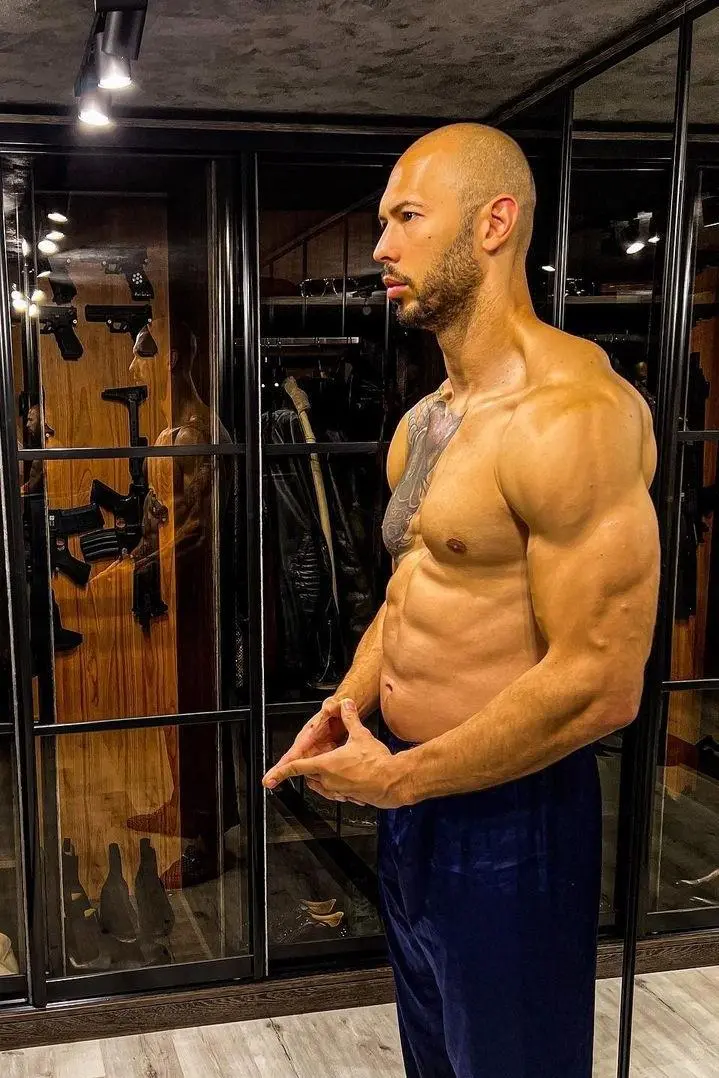
Chest : There’s this saying online that chest is your confidence or something like that. I do feel a surge of confidence after doing bench, it’s the most fun I have at the gym quite honestly. Anyways, an important thing to keep in mind for chest exercises is that the lower chest is much easier to grow than the right chest, but it's important to balance these 2 parts of the chest as it's essential for an aesthetic chest or else your chest will look saggy like our friend Andrew Tate's. :
Flat bench press
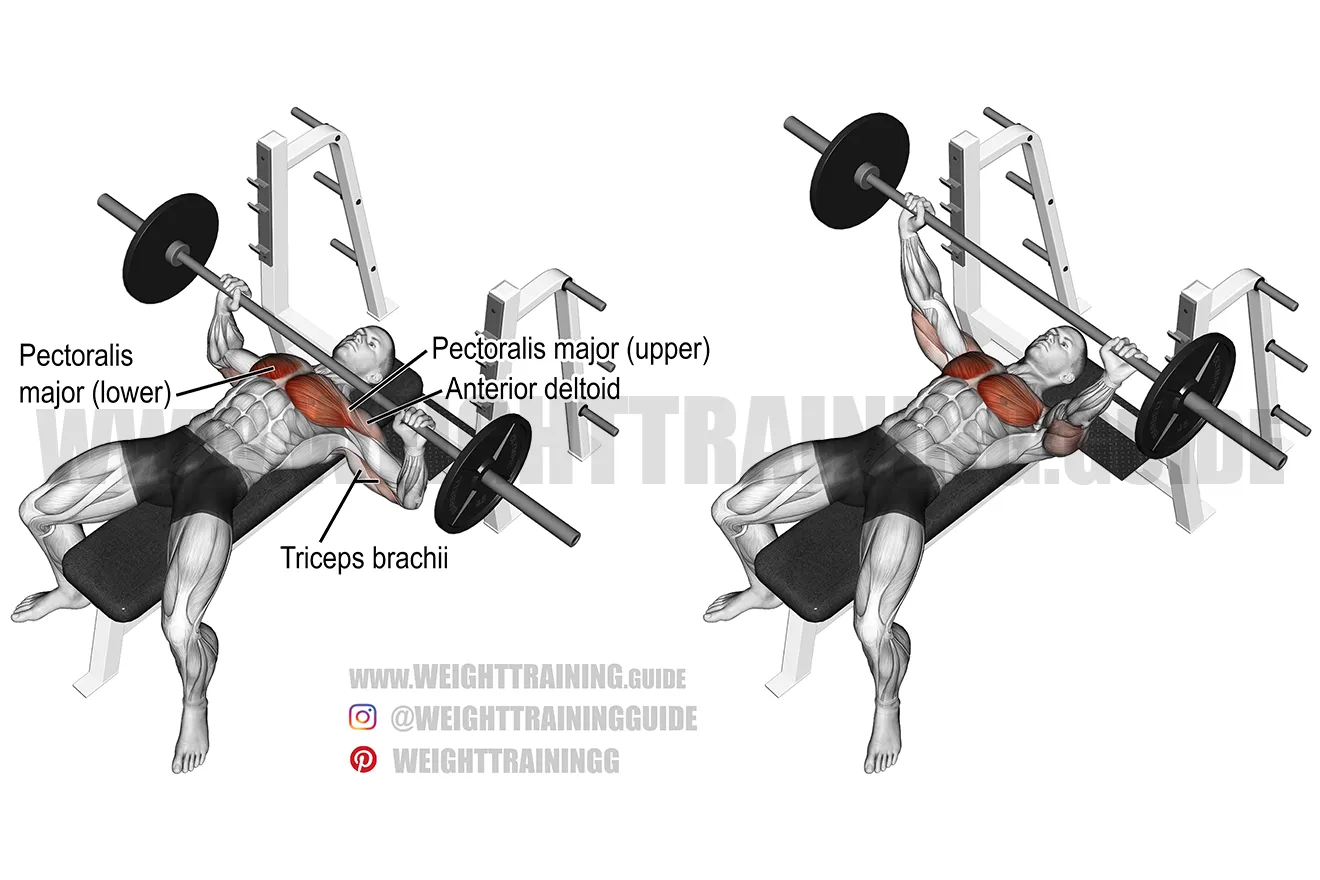
The king of chest exercises, the flat bench press targets both the lower and upper chest but also the front delts and triceps. Here's a good video on how to adopt proper flat bench posture :
Incline bench press
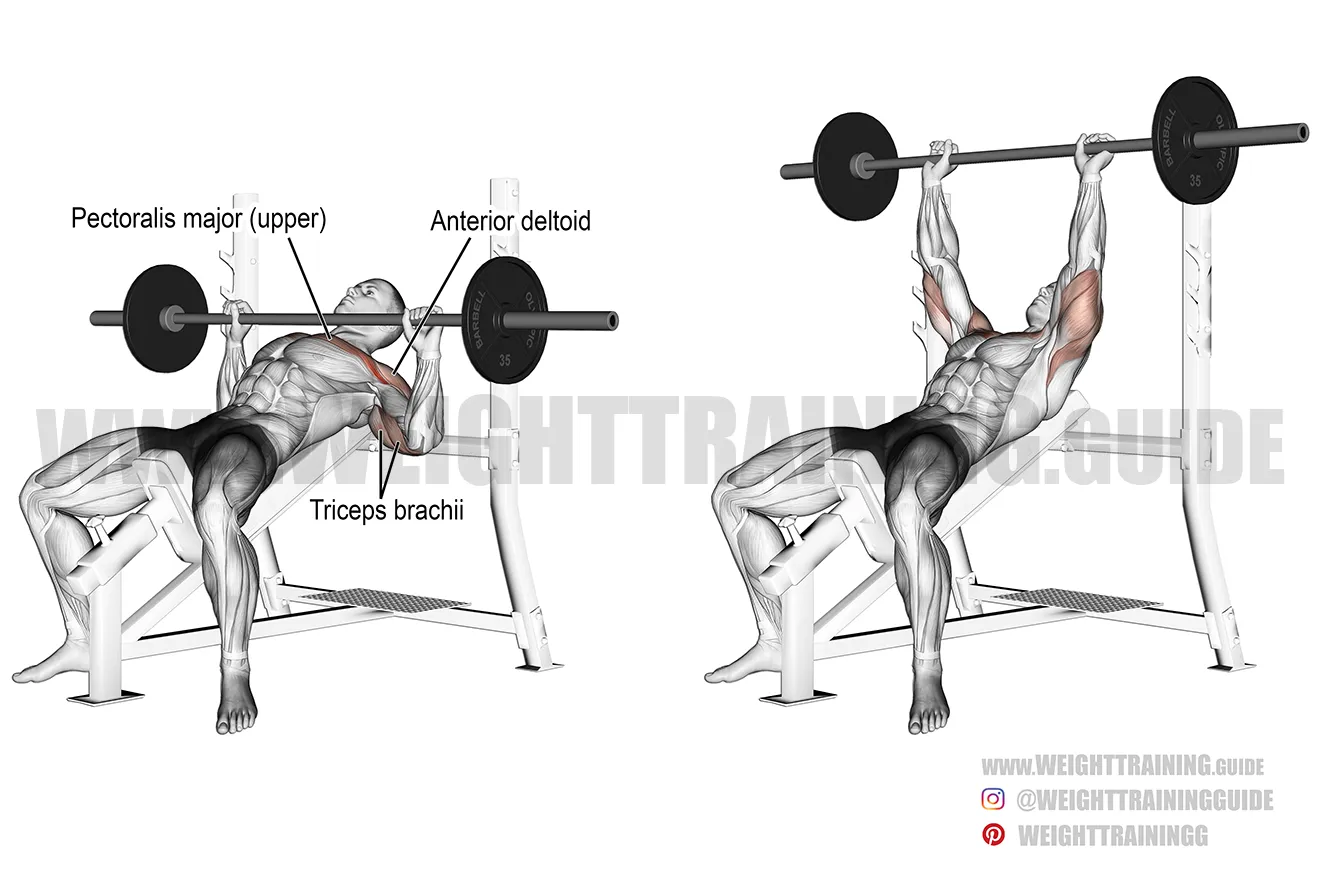
This bench variant puts much more emphasis on the upper chest than the lower chest. You want to set the bench at a 30° angle to accurately hit the upper chest. This exercise can be both be done well with dumbbells or a barbell.
Chest cable flys
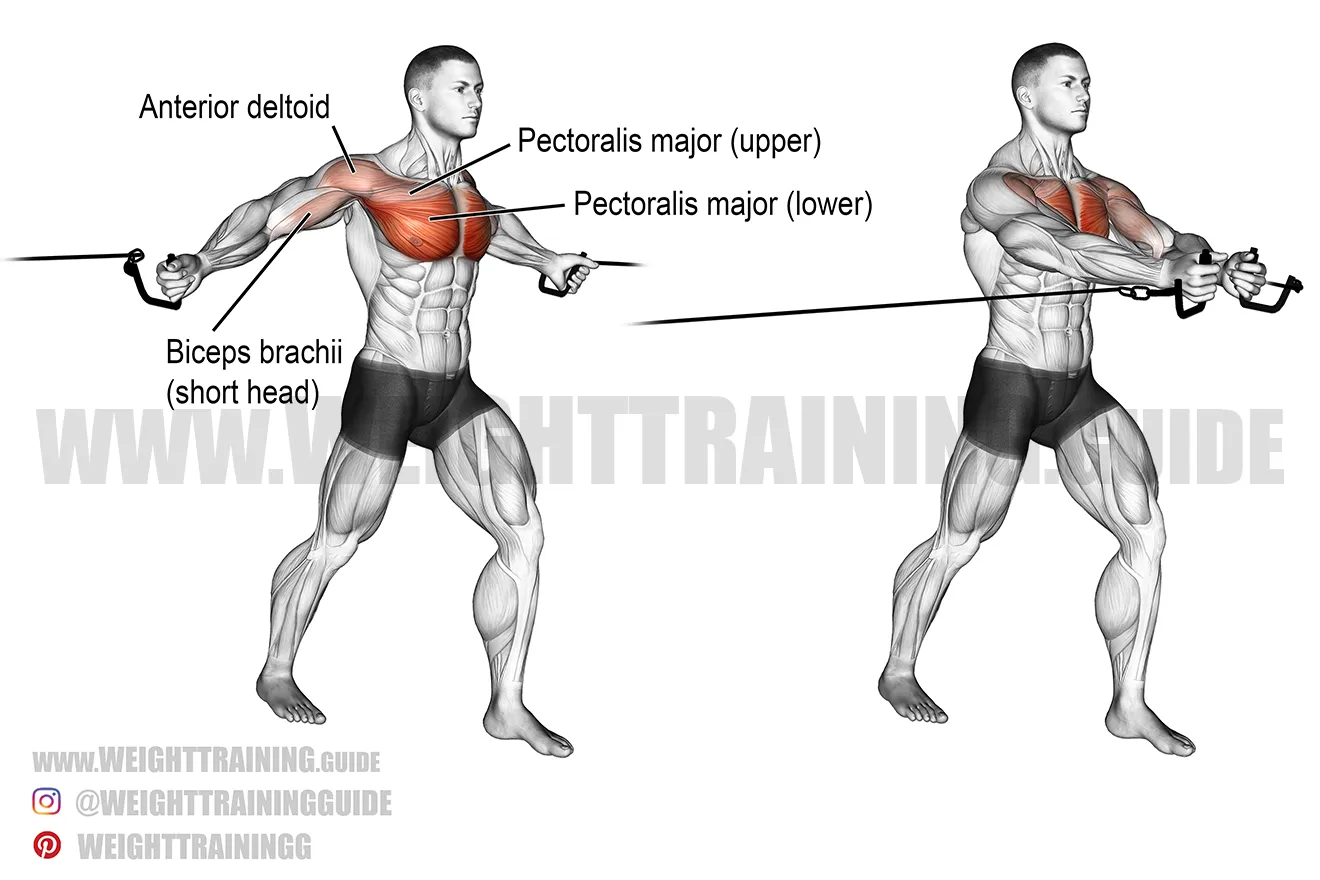
Cable flys are a great alternative to the bench press but require 2 fly machines which some gyms dont have next to each other. High to low movement targets lower chest and low to high movement targets the upper chest, like seen in the image above.
Flat bench press
The king of chest exercises, the flat bench press targets both the lower and upper chest but also the front delts and triceps. Here's a good video on how to adopt proper flat bench posture :
Incline bench press
This bench variant puts much more emphasis on the upper chest than the lower chest. You want to set the bench at a 30° angle to accurately hit the upper chest. This exercise can be both be done well with dumbbells or a barbell.
Chest cable flys
Cable flys are a great alternative to the bench press but require 2 fly machines which some gyms dont have next to each other. High to low movement targets lower chest and low to high movement targets the upper chest, like seen in the image above.
Arms : Your arms are about the most visible muscle group in your body, they're the ones people tend to notice first because they’re often uncovered and constantly on display in daily life. Your arms can be divided into 3 major muscles : Triceps, Biceps and Forearms. Your triceps are the biggest muscle in your arms, the biceps are the most popular and the triceps are the most visible in everyday clothes. Make sure to integrate at least one exercise for each of them in your routine, especially for the forearms that tend to be overlooked.
Triceps pushdown
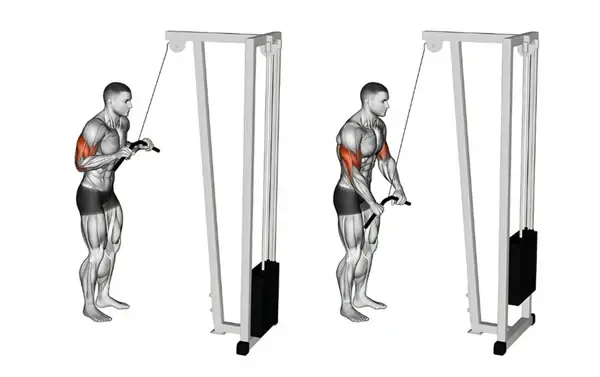
The most popular exercise targeting the triceps, an absolute classic that has tons of variations. Rope, Bar or Cable kickback are all great ways of hitting your triceps.
Overhead Triceps extension
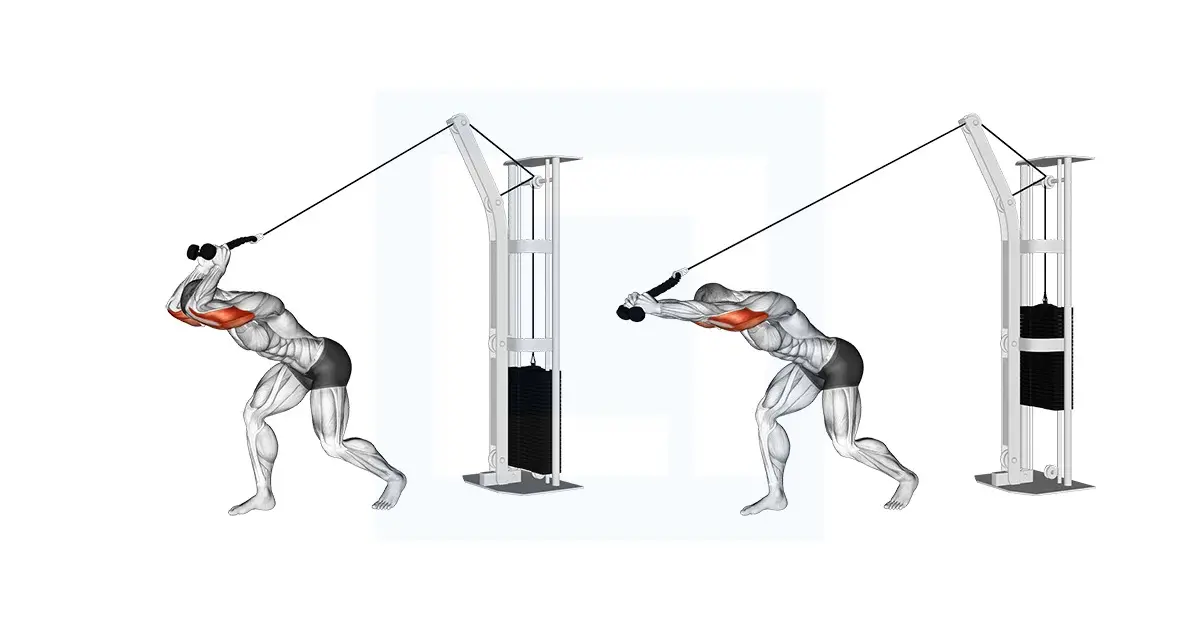
Another great exercise for triceps
Bicep curls
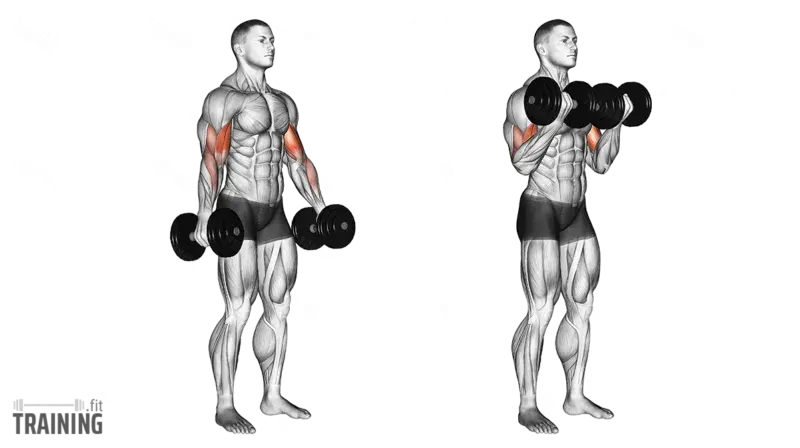
Can be done both with dumbbells or a barbell, make sure to let the weight be all done between each rep and to stand still and be stable during the whole set to not divert the tension from your biceps to your back.
Cable Bicep Curls
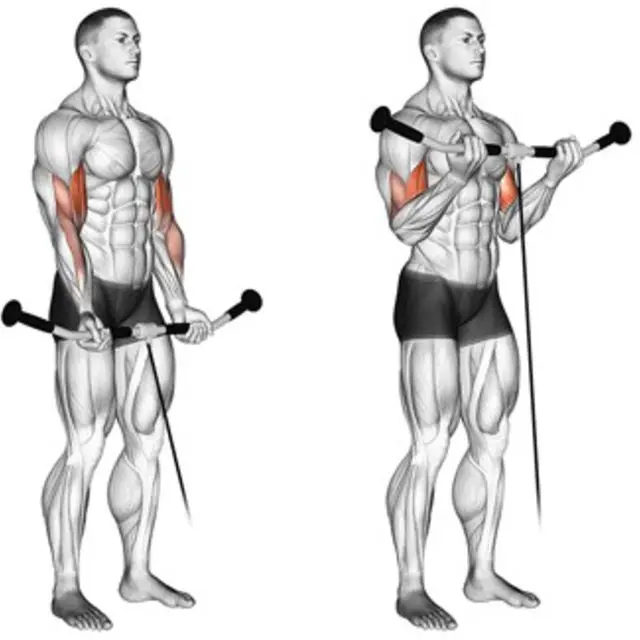
Can be done with both a rope or bar
Hammer curls
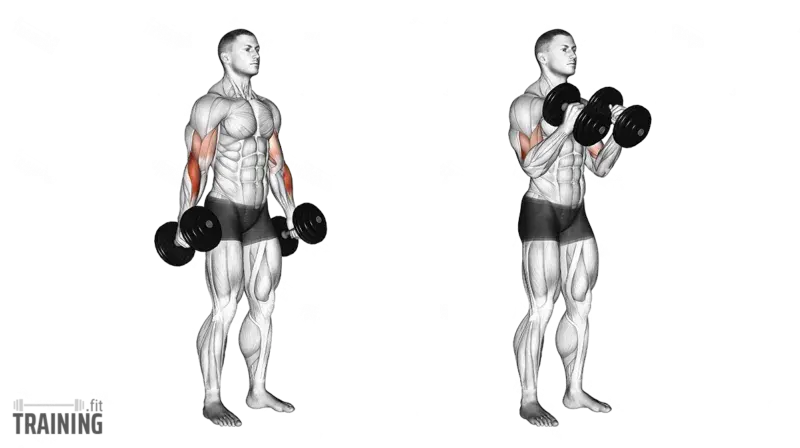
Very similar to biceps curls but you lift the dumbbells parallel to you, it targets the long head of the forearm but also works the biceps.
Farmer carries
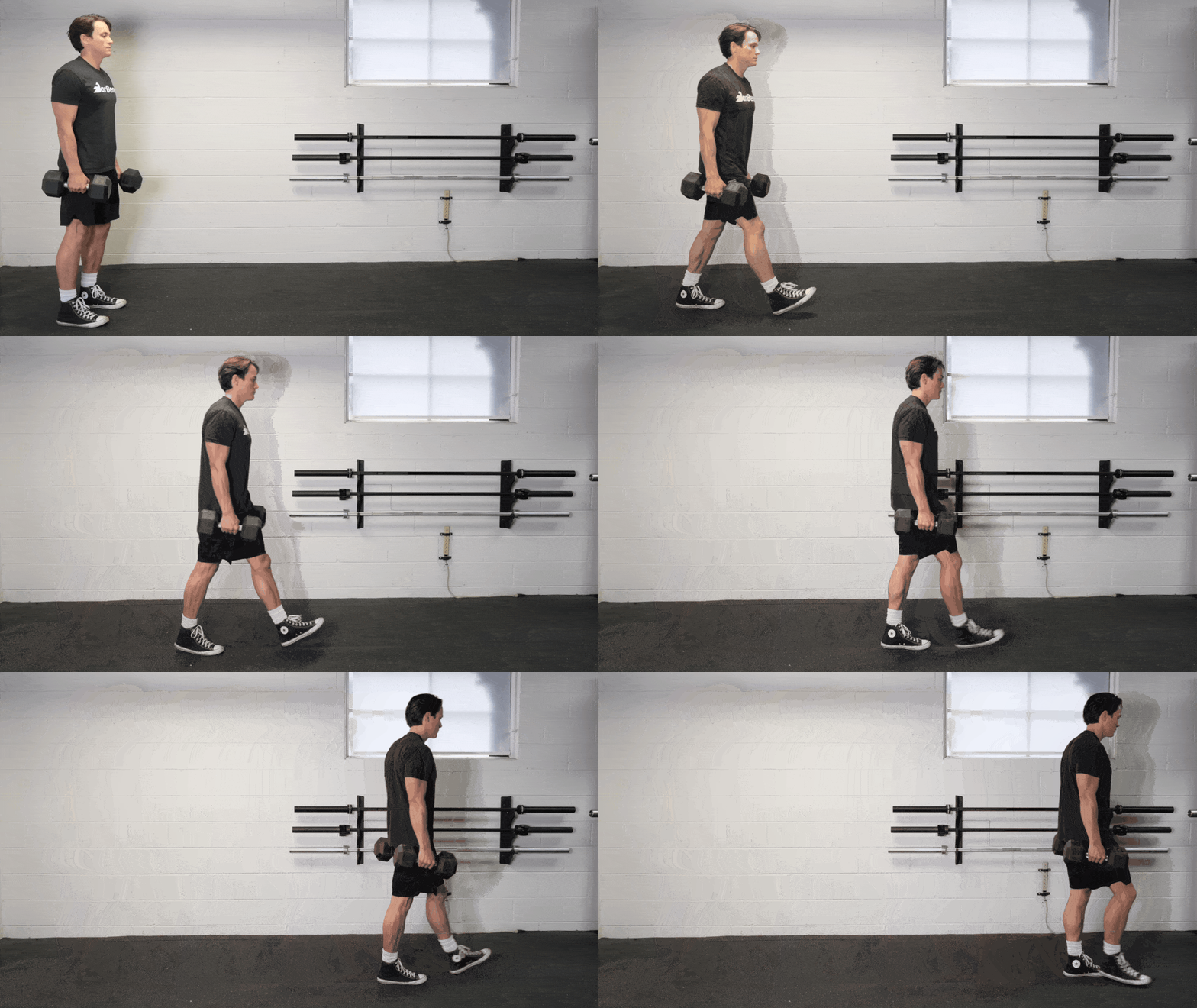
Farmer carries are one of my favorite exercises for its simplicity. You just gotta hold 2 heavy weights (could be kettlebells or dumbbells), let them hang and walk with them. The burning sensation I get from both heads of the forearms gets pretty intense, generally you want to hold them around 30-45 seconds.
Triceps pushdown
The most popular exercise targeting the triceps, an absolute classic that has tons of variations. Rope, Bar or Cable kickback are all great ways of hitting your triceps.
Overhead Triceps extension
Another great exercise for triceps
Bicep curls
Can be done both with dumbbells or a barbell, make sure to let the weight be all done between each rep and to stand still and be stable during the whole set to not divert the tension from your biceps to your back.
Cable Bicep Curls
Can be done with both a rope or bar
Hammer curls
Very similar to biceps curls but you lift the dumbbells parallel to you, it targets the long head of the forearm but also works the biceps.
Farmer carries
Farmer carries are one of my favorite exercises for its simplicity. You just gotta hold 2 heavy weights (could be kettlebells or dumbbells), let them hang and walk with them. The burning sensation I get from both heads of the forearms gets pretty intense, generally you want to hold them around 30-45 seconds.
Shoulders : Your shoulders and back are key to an aesthetic physique, they're essential to build a wide frame and v-taper. I won't be mentioning any exercise that isolates the front delt as it is already well-developed in lifters who consistently do bench exercises.
Shoulder press
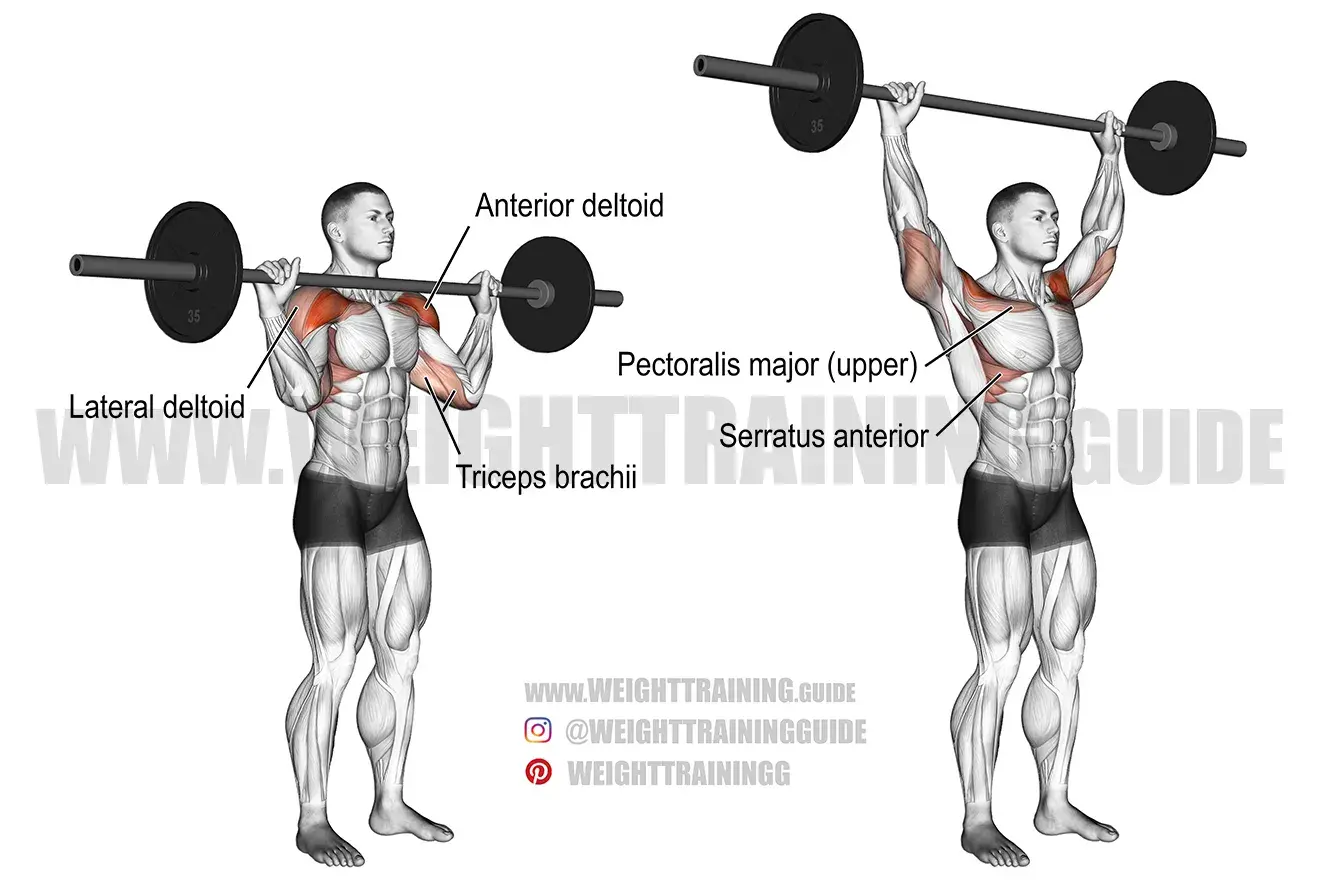
Overall works shoulder strength and helps with core stability.
Lateral raises
It's important for this exercise to lean a bit and not be completely stiff like shown on the video. It targets the mid delts, which are essential for a good shoulder aesthetic. Can also be done well with a cable machine.
Cable Rear Delt Fly
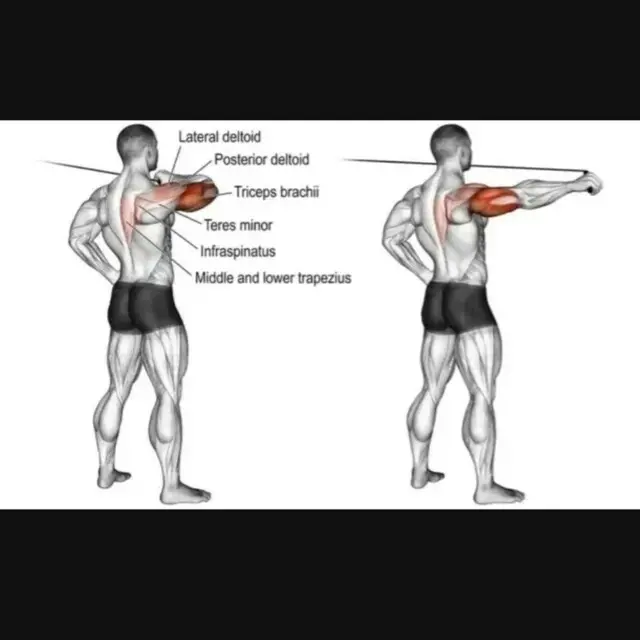
Targets the rear delt, which is essential for that 3D shoulder look. I could have included Rope Pulls or the Reverse Pec Deck but the cable fly gives me the best stretch and burn.
Shoulder press
Overall works shoulder strength and helps with core stability.
Lateral raises
It's important for this exercise to lean a bit and not be completely stiff like shown on the video. It targets the mid delts, which are essential for a good shoulder aesthetic. Can also be done well with a cable machine.
Cable Rear Delt Fly
Targets the rear delt, which is essential for that 3D shoulder look. I could have included Rope Pulls or the Reverse Pec Deck but the cable fly gives me the best stretch and burn.
Gotta cut the thread in half because of the 20 images limit.